
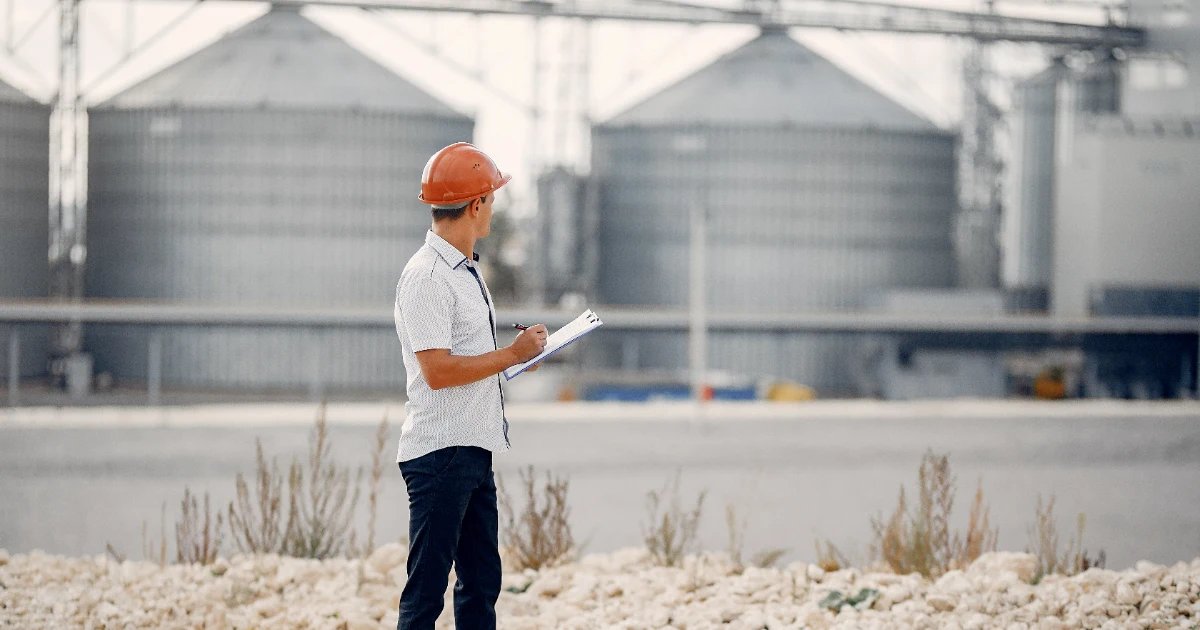
If you are researching How to Start a Factory in RAKEZ, the first thing to understand is that a factory setup involves much more than obtaining a business licence. You need to select the right manufacturing activity, industrial location, facility, utilities, machinery, approvals, workforce structure, and compliance framework before production begins.
RAKEZ, or Ras Al Khaimah Economic Zone, has dedicated industrial areas supporting manufacturing, processing, assembly, storage, and other industrial activities. Investors can consider development land or ready warehouses depending on the scale and nature of the project.
This guide explains the process in practical terms so entrepreneurs, foreign investors, SMEs, and international companies can understand what is involved in establishing a factory in the UAE.
What Does Starting a Factory in RAKEZ Involve?
Starting a factory in RAKEZ means establishing a manufacturing or industrial business within the RAKEZ ecosystem and obtaining the appropriate licence and facility approvals for the proposed operation.
The first decision is your business activity. A company manufacturing food products will have different operational and regulatory considerations from a metal fabrication plant, packaging factory, chemical manufacturer, or building-materials producer.
RAKEZ offers industrial development land for industrial, logistics, and service-industry projects. These plots can be developed according to business requirements, subject to RAKEZ approval. RAKEZ also offers warehouses that can accommodate activities such as light manufacturing, assembly, storage, and fabrication.
Therefore, your factory project should be planned around the actual manufacturing process rather than simply choosing the cheapest available facility.
Why Choose RAKEZ for a Factory?
Location can have a direct impact on a factory’s logistics and operating costs.
RAKEZ has several industrial zones designed for different industrial requirements. Al Hamra Industrial Zone supports light and heavy industry and provides access to industrial land, warehouses, utilities, ports, and major UAE markets. Al Hulaila is positioned toward heavier industrial manufacturing and is close to Saqr Port.
For manufacturers, relevant advantages include:
- Purpose-built industrial environment for manufacturing and processing businesses.
- Industrial land and warehouses for different project sizes.
- Access to logistics infrastructure and major transport routes.
- Utility connections for industrial operations.
- Workforce accommodation options in selected industrial locations.
- Free zone and, where applicable, non-free zone structures, depending on the location and setup.
- Business setup support covering company formation and licensing.
RAKEZ also promotes warehouse solutions for storage, logistics, assembly, fabrication, and light manufacturing.
Benefits of Starting a Factory in RAKEZ
A properly planned factory can offer practical operational advantages:
- Customised production facility: Development land allows you to plan the building around machinery and production requirements.
- Better workflow: Raw materials, production, quality control, storage, and dispatch can be arranged logically.
- Expansion capacity: A facility can be planned with future production increases in mind.
- Industrial infrastructure: Utilities and logistics infrastructure are important for continuous operations.
- Access to regional markets: Ras Al Khaimah provides connectivity to other UAE emirates and international logistics routes.
- Workforce support: Selected locations offer staff and labour accommodation options.
- Integrated setup: Company Formation, licensing, Visa Services, banking, and compliance can be planned as part of the overall Business Setup UAE process.
The best benefit, however, comes from matching the factory location and facility with the actual business model.
Requirements for Starting a Factory in RAKEZ
Requirements vary according to the manufacturing activity, licence type, facility, products, machinery, and applicable regulatory requirements.
Before starting, prepare information covering:
Business Activity
Clearly define what the factory will manufacture, process, assemble, package, or produce. The activity must be compatible with the selected RAKEZ licence.
Industrial Licence
Manufacturing businesses generally require an appropriate Industrial Licence. RAKEZ reviews the proposed activity and supporting information as part of the licensing process.
Facility
Determine whether the project requires:
- Industrial development land
- A ready warehouse
- Production space
- Storage facilities
- Offices
- Staff or labour accommodation
RAKEZ currently lists development plots starting from 2,500 m² for certain land-for-development offerings, while warehouse options start from 150 m². Availability and suitability depend on the project.
Technical and Regulatory Approvals
A factory may require additional approvals depending on its activities and facility. RAKEZ’s manufacturing guidance identifies approvals involving relevant environmental, municipal, civil-defence, health, safety, and technical requirements.
Do not assume that every factory requires the same approvals. The exact requirements should be confirmed for the proposed product and manufacturing process.
How to Start a Factory in RAKEZ: Step-by-Step Process
1. Define Your Manufacturing Business
Start with the product, manufacturing process, machinery, expected production capacity, raw materials, storage requirements, and target markets.
This information will influence almost every later decision.
2. Select the Business Activity
Identify the appropriate RAKEZ activity and confirm whether it is permitted under the proposed licence.
Do this before signing a facility agreement or ordering major machinery.
3. Choose the Industrial Zone
Compare the available RAKEZ industrial locations based on:
- Factory size
- Utility requirements
- Port access
- Road connectivity
- Workforce requirements
- Storage needs
- Expansion plans
For example, proximity to Saqr Port can be particularly relevant for businesses handling bulk materials or international cargo.
4. Choose Land or a Warehouse
A large manufacturer may require development land for a purpose-built factory.
A smaller operation may be able to use a ready warehouse if the facility is suitable for its activity. RAKEZ warehouses are available in different sizes and can be modified with approval.
5. Complete Company Formation and Licensing
Prepare the required shareholder, identification, corporate, and business documents and complete the applicable UAE Company Registration and licensing procedures.
The exact documentation depends on the proposed legal structure and business activity.
6. Obtain Required Approvals
Before construction or operation, identify the technical, environmental, safety, construction, utility, and other approvals applicable to the project.
This stage is particularly important for factories using specialised machinery, industrial chemicals, high-power equipment, or regulated production processes.
7. Construct or Prepare the Facility
If you are developing land, coordinate the approved factory design, construction, utilities, safety systems, production areas, storage, offices, and loading zones.
If you are leasing a warehouse, confirm that the existing facility can accommodate your machinery and production requirements.
8. Arrange Visas, Banking and Tax
After the company and facility structure are established, arrange eligible investor and employee Visa Services, open a suitable Business Banking relationship, and assess Corporate Tax and VAT obligations.
9. Begin Operations and Maintain Compliance
Once the necessary approvals are in place, establish production procedures, employee records, accounting systems, safety processes, inventory controls, and ongoing UAE Compliance procedures.
Tax Considerations for a RAKEZ Factory
A factory operating in a UAE Free Zone should not assume that free zone status automatically eliminates tax obligations.
The UAE Corporate Tax regime applies to businesses within its scope, including free zone businesses. Specific treatment may apply to qualifying free zone businesses that meet the relevant conditions. Therefore, the factory’s activities, income, transactions, structure, and compliance position should be reviewed individually.
VAT should also be assessed separately. The Federal Tax Authority states that UAE-resident businesses generally must register for VAT when taxable supplies and imports exceed AED 375,000 over the previous 12 months or are expected to exceed that amount in the next 30 days. Voluntary registration may be available above AED 187,500, subject to the applicable rules.
Factory owners should therefore establish proper accounting and tax-record systems from the beginning.
Common Mistakes to Avoid
When planning a factory, avoid these common mistakes:
- Choosing a facility before confirming the manufacturing activity.
- Underestimating electricity and utility requirements.
- Designing the factory without considering machinery dimensions.
- Ignoring truck access and loading requirements.
- Failing to identify required approvals early.
- Underestimating raw-material and finished-goods storage.
- Leaving tax, accounting, and compliance planning until after operations begin.
A factory is a long-term investment, so decisions made during the planning stage can have significant operational consequences.
Tips for a Successful Factory Setup
Before committing to the project, prepare a basic feasibility plan covering:
- Product and production process
- Required Industrial Licence
- Land or warehouse size
- Machinery and equipment
- Power and utility demand
- Raw-material storage
- Finished-product storage
- Loading and unloading
- Workforce requirements
- Employee accommodation
- Import and export arrangements
- Expected production growth
- Tax and accounting requirements
It is also useful to compare the cost and timeline of constructing a factory with leasing a ready warehouse. A purpose-built facility provides greater control, while an existing warehouse can be more suitable for certain smaller or less specialised operations.
Why Work With a RAKEZ Business Setup Consultant?
Factory formation involves several connected decisions. A mistake in the business activity can affect licensing; an unsuitable facility can affect operations; and inadequate utility planning can create problems after construction.
A RAKEZ business setup consultant can help investors coordinate the early stages of company formation, activity selection, licensing, facility selection, documentation, visa planning, and compliance.
For international investors, professional guidance can also make UAE business procedures easier to navigate.
However, consultants do not replace RAKEZ, the Federal Tax Authority, banks, or other competent authorities. Final approvals and requirements remain subject to the relevant authority and the individual project.
Final Thoughts
Understanding How to Start a Factory in RAKEZ is about more than obtaining an Industrial Licence. A successful project requires careful planning around the manufacturing activity, industrial zone, land or warehouse, utilities, machinery, approvals, workforce, logistics, taxation, banking, and compliance.
RAKEZ provides industrial land, warehouses, infrastructure, and business setup options that can support different manufacturing models.
If you are planning a manufacturing business in Ras Al Khaimah, contact RAKEZUAE.com for tailored assistance with Company Formation, Industrial Licence requirements, facility selection, Visa Services, Business Banking, taxation, and UAE Compliance.
Frequently Asked Questions
1. How much does it cost to start a factory in RAKEZ?
There is no single factory setup cost because the investment depends on the manufacturing activity, licence, land or warehouse requirement, factory size, construction, machinery, utilities, approvals, workforce, and operating model. Investors should prepare a project-specific feasibility budget rather than relying on a standard company formation estimate.
2. Can I build my own factory in RAKEZ?
Yes. RAKEZ offers development land for industrial projects, allowing businesses to construct facilities according to their operational requirements, subject to RAKEZ approval and applicable regulations. This can be suitable for manufacturers requiring specialised machinery layouts, production areas, storage capacity, utility infrastructure, or additional space for future expansion.
3. What licence do I need to manufacture products in RAKEZ?
The appropriate licence depends on the approved manufacturing activity. RAKEZ provides an Industrial Licence for relevant industrial activities, but the specific activity should be confirmed before applying. Additional approvals may also apply depending on the product, manufacturing process, facility, machinery, and applicable regulatory requirements.
4. Can a small manufacturer use a RAKEZ warehouse instead of building a factory?
Potentially, depending on the activity and operational requirements. RAKEZ provides warehouses in different sizes for activities including light manufacturing, assembly, fabrication, and storage. A warehouse can be a practical option when a business does not need a purpose-built factory, but the facility must be suitable for the approved activity.
5. Does a RAKEZ factory need VAT registration?
VAT registration depends on the company’s taxable supplies, imports, and applicable UAE VAT rules. For UAE-resident businesses, mandatory registration generally applies when taxable supplies and imports exceed AED 375,000 over the previous 12 months or are expected to exceed that threshold in the next 30 days. Voluntary registration may be available above AED 187,500.
6. Can foreign investors start a factory in RAKEZ?
Foreign investors can establish businesses in RAKEZ subject to the applicable company formation, licensing, facility, and regulatory requirements. The appropriate structure depends on the activity and intended operations. Investors should also consider visas, banking, taxation, import and export requirements, and any approvals relevant to their manufacturing process before starting operations.