
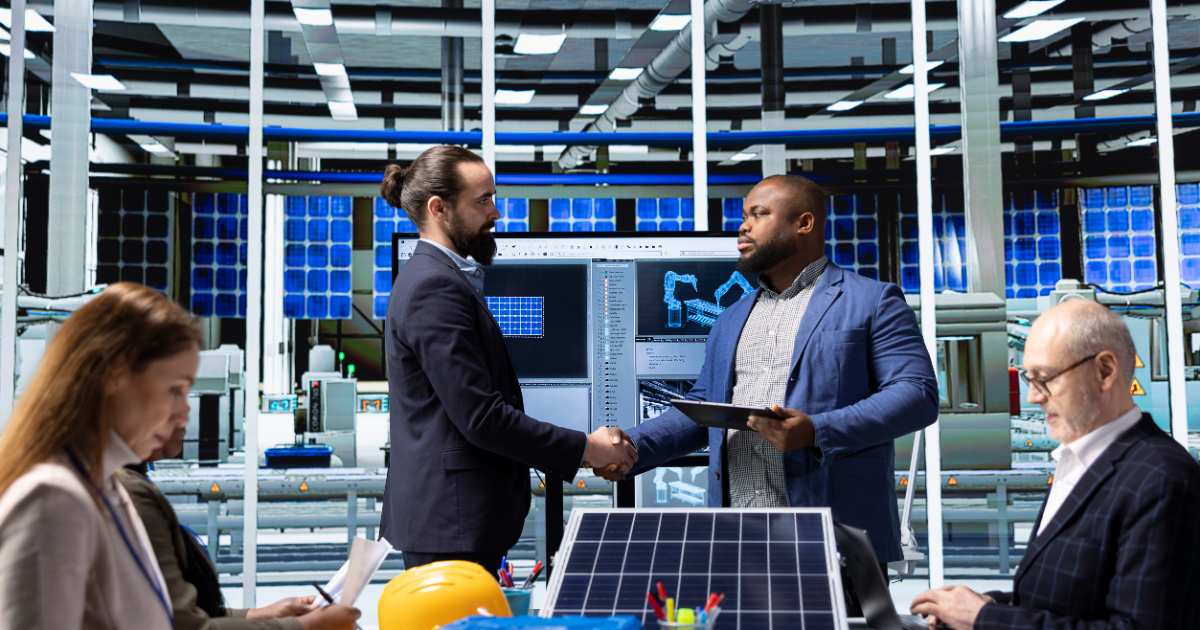
solar panel manufacturing in RAKEZ
Can You Start a Solar Panel Manufacturing Business in RAKEZ?
Renewable energy is creating new opportunities for manufacturers, equipment suppliers and technology companies across the UAE.
But is Ras Al Khaimah Economic Zone suitable for setting up a solar panel production facility?
A recent industrial development offers a useful example.
On 14 September 2026, RAKEZ announced the launch of a solar panel and Building Integrated Photovoltaics (BIPV) manufacturing facility by ZAKH Renewable Energy and Engineering Manufacturing.
Located in Al Ghail Industrial Zone, the project demonstrates how specialised renewable energy manufacturing can operate within RAKEZ’s industrial ecosystem.
Quick answer: Solar panel manufacturing is possible in RAKEZ, subject to the appropriate industrial activity, licence, facility and regulatory approvals. Investors should evaluate their production process, machinery, electricity requirements, quality standards and target markets before beginning company registration.
Why Is Solar Manufacturing Attracting Attention in the UAE?
The UAE continues to pursue renewable energy development, industrial diversification and long-term sustainability objectives.
Solar technology is relevant not only to utility-scale energy projects but also to commercial buildings, industrial facilities and specialised construction applications.
This creates potential opportunities across the solar supply chain.
Businesses may participate in solar panel production, specialised components, engineering, equipment distribution or related technical services.
However, investor demand and project profitability cannot be assumed simply because the renewable energy sector is expanding.
A successful manufacturing business requires reliable customers, competitive production costs, suitable technology and a commercially viable operating plan.
RAKEZ’s New Solar Manufacturing Development
ZAKH’s Ras Al Khaimah facility is a notable example of renewable energy manufacturing investment.
According to RAKEZ’s September 2026 announcement, the factory occupies a 30,000-square-metre plot in Al Ghail Industrial Zone.
The facility has a reported annual production capacity of 600 megawatts of solar panels, alongside capacity for up to 500,000 square metres of BIPV façade solutions.
ZAKH also announced plans to increase solar module manufacturing capacity to more than 1.8 gigawatts in future years.
That expansion figure represents a plan, not an already completed production increase.
The manufacturer intends to serve customers in the UAE, GCC, MENA and other international markets.
For prospective investors, the project provides an example of the scale and industrial requirements involved in advanced photovoltaic manufacturing.
It does not establish a minimum investment or facility size for every solar-related business.
What Is BIPV Manufacturing?
BIPV stands for Building Integrated Photovoltaics.
Unlike conventional solar panels mounted onto existing structures, BIPV products are designed to become part of a building’s construction or exterior.
Examples include photovoltaic façades, certain roofing systems and other building elements that incorporate solar electricity generation.
BIPV technology can combine architectural design with energy production.
For manufacturers, this creates a specialised market requiring attention to electrical performance, structural compatibility, materials, safety and product design.
Solar Panels vs BIPV: What’s the Difference?
| Feature | Conventional Solar Panels | BIPV Products |
|---|---|---|
| Main purpose | Generate electricity | Building integration and electricity generation |
| Installation | Often mounted on supporting structures | Integrated into building components |
| Product design | Typically standardised modules | May require customised architectural designs |
| Typical customers | Solar developers and installers | Developers, architects and building contractors |
| Manufacturing needs | Photovoltaic production and quality testing | Photovoltaic production plus building-material performance requirements |
The applicable technical standards depend on the product and intended application.
What Types of Solar Businesses Can Investors Explore?
Not every solar energy company needs a large factory.
There are several potential business models, each with different licensing and operational requirements.
1. Solar Panel Manufacturing
Manufacturing businesses may produce photovoltaic modules or carry out approved stages of production and assembly.
This typically involves specialised equipment, component sourcing, quality control and suitable industrial premises.
2. BIPV Product Manufacturing
Businesses may focus on photovoltaic building products, including specialised façade or architectural solutions.
This model requires close coordination between engineering, product design and construction-related requirements.
3. Solar Equipment Trading
An investor may choose to import and distribute solar panels, inverters, mounting systems or related equipment.
Trading generally involves a different licence classification from manufacturing.
4. Solar Engineering and Technical Services
Companies may provide design, technical consultancy or engineering support, subject to the approved activities and any required professional or sector-specific permissions.
5. Solar Component Supply
Businesses may specialise in supplying approved materials, mechanical components, packaging or production inputs to renewable energy manufacturers.
Before selecting a business model, investors should confirm the exact activity permitted under the proposed licence.
How to Start a Solar Panel Manufacturing Company in RAKEZ
Establishing a renewable energy manufacturing business involves several important steps.
Step 1: Define Your Manufacturing Activity
Begin with a clear description of what the company will produce.
Will it manufacture complete photovoltaic modules, assemble imported components or produce specialised building-integrated products?
This distinction affects licensing, equipment and facility requirements.
Avoid choosing a general industrial activity without confirming that it covers your actual operations.
Step 2: Prepare a Business Plan
A manufacturing business plan should explain:
- Proposed solar products.
- Target customers and export markets.
- Manufacturing process.
- Expected production capacity.
- Machinery and technology requirements.
- Raw material sources.
- Facility and workforce requirements.
- Quality assurance procedures.
- Estimated investment and operating costs.
A business plan should be realistic and based on supplier quotations and customer demand rather than promotional industry forecasts.
Step 3: Choose the Appropriate Industrial Licence
Solar panel manufacturing will generally require an appropriate industrial licensing arrangement.
RAKEZ offers industrial licensing options for qualifying manufacturing activities.
The exact permitted activity and any additional approvals should be confirmed before applying.
A commercial licence intended for trading solar equipment should not be assumed to authorise manufacturing operations.
Step 4: Select a Suitable Factory Location
Facility selection depends on the manufacturing process and investment scale.
RAKEZ has several industrial zones serving different operational requirements.
Al Ghail Industrial Zone is one example and is the location of ZAKH’s announced facility.
Investors should compare options according to available space, production requirements, utilities, logistics and regulatory suitability.
A smaller assembly operation may need different facilities from a large-scale automated production line.
Step 5: Review Machinery and Utilities
Solar manufacturing can involve equipment for processing, assembly, testing, handling and packaging.
Before committing to a facility, identify the required electrical supply, machinery layout, ventilation, storage and safety systems.
Some operations may have special requirements for temperature management, materials handling or specialised testing.
Technical feasibility should be assessed before signing long-term facility agreements or purchasing machinery.
Step 6: Obtain Applicable Approvals
Manufacturing companies may need permissions involving environmental protection, civil defence, building safety or other relevant authorities.
RAKEZ also has health, safety and environment and technical requirements for industrial premises.
The necessary approvals depend on the specific activity and production process.
For BIPV products, investors should additionally assess applicable electrical, building-material and product certification requirements in their target markets.
Step 7: Complete Company Registration
Once the proposed activity and facility have been assessed, investors can proceed with the relevant company formation process.
The documentation may include shareholder information, business plans, incorporation documents and technical details where required.
Additional documents and approvals may apply depending on the project.
Step 8: Set Up Banking and Accounting
A manufacturing company should establish reliable financial records from the beginning.
Banks may assess the company’s ownership, investment sources, machinery purchases, business model, suppliers and expected transactions.
Accounting systems should be capable of recording inventory, production expenses, fixed assets, employee costs and other financial information.
Businesses must also assess their applicable UAE Corporate Tax and VAT obligations.
How Much Does Solar Manufacturing Setup Cost in RAKEZ?
There is no single cost applicable to every solar manufacturing project.
The investment required depends on whether the company plans to operate a small assembly facility or a larger manufacturing plant.
Important cost categories include:
| Cost Category | Main Considerations |
|---|---|
| Company formation | Industrial licence and registration |
| Industrial premises | Warehouse or development land |
| Machinery | Production, assembly and testing equipment |
| Utilities | Electricity, water and other infrastructure |
| Technical approvals | Required permits and inspections |
| Workforce | Employees, visas and related costs |
| Materials | Components and initial inventory |
| Working capital | Rent, supplier payments and operating expenses |
Investors should request an itemised business setup quotation and separate it from manufacturing equipment and operational expenditure.
A low trade licence price alone does not indicate the total investment required for a functioning solar production facility.
Can a RAKEZ Solar Manufacturer Sell Products Across the UAE?
A RAKEZ manufacturing company may be able to serve customers in the UAE and international markets, subject to its licensed activities and the applicable customs, market-access and product requirements.
However, a free zone licence does not automatically authorise unrestricted mainland activities.
The legal and customs treatment depends on the transaction structure and location of the buyer.
Manufacturers should also confirm whether their products need conformity assessments, certifications or other approvals before being placed on a particular market.
For international exports, destination-country requirements must be considered separately.
Is Solar Manufacturing Eligible for 0% Corporate Tax?
A RAKEZ company is not automatically exempt from UAE Corporate Tax simply because it holds a free zone licence.
A Qualifying Free Zone Person may benefit from a 0% Corporate Tax rate on qualifying income when the relevant statutory conditions are met.
Manufacturing activities can be relevant to the qualifying activity framework, but eligibility depends on the specific facts and applicable legislation.
Other income may attract different treatment.
Investors should obtain an appropriate tax assessment instead of assuming that all manufacturing profits will be taxed at 0%.
VAT, customs and accounting obligations should also be reviewed separately.
What Challenges Should Investors Consider?
Renewable energy manufacturing can offer business opportunities, but it also involves commercial and operational risks.
Technology Selection
Manufacturing technology can change, affecting product competitiveness and equipment investment decisions.
Quality and Certification
Solar products may require performance testing and compliance with technical standards.
Supply Chain Reliability
Raw materials and components must be available at commercially sustainable prices.
Customer Acquisition
Manufacturers need a clear strategy for securing buyers rather than relying only on expectations of future demand.
Capital Requirements
Industrial projects may require substantial upfront investment before generating revenue.
A detailed feasibility study helps investors assess these risks.
Why Consider RAKEZ for Renewable Energy Manufacturing?
RAKEZ offers industrial infrastructure, licensing services and access to business support.
Its industrial zones accommodate different manufacturing requirements, while its location can support regional trade and distribution.
The ZAKH project provides a recent example of specialised solar manufacturing investment in Ras Al Khaimah.
However, the suitability of RAKEZ depends on each project’s production needs, investment scale, technical requirements and target customers.
Investors should compare the available facilities and assess the commercial feasibility of their operations before making a final decision.
Explore RAKEZ Manufacturing Business Setup
Renewable energy manufacturing is a specialised opportunity that requires proper planning.
From choosing the correct industrial activity to evaluating factories, machinery and regulatory approvals, investors should understand the complete setup process.
RAKEZUAE.com provides independent guidance for investors and entrepreneurs exploring industrial business setup in Ras Al Khaimah.
We can help you understand available registration options, documentation requirements and the company formation process.
You can also read our existing guide: How to Start a Factory in RAKEZ.
Considering a solar manufacturing business in the UAE?
Visit RAKEZUAE.com to request guidance based on your proposed manufacturing activity, budget and facility requirements.
Frequently Asked Questions
1. Can I start a solar panel manufacturing company in RAKEZ?
Yes, solar panel manufacturing can be established in RAKEZ, subject to obtaining the appropriate industrial licence, facility and required regulatory approvals.
2. What is BIPV manufacturing?
BIPV manufacturing involves producing photovoltaic products designed to form part of buildings, such as certain solar façades and roofing components.
3. Does RAKEZ already have a solar panel manufacturing facility?
Yes. RAKEZ announced ZAKH’s solar panel and BIPV manufacturing facility in Al Ghail Industrial Zone on 14 September 2026.
4. How much does a solar manufacturing licence cost in RAKEZ?
Costs vary by industrial activity, facility requirements and approvals. Total project investment also depends on machinery, utilities, staffing and working capital. An individual quotation is necessary.
5. Can foreign investors own a solar manufacturing company in RAKEZ?
RAKEZ generally permits 100% foreign ownership of eligible free zone companies. The proposed manufacturing activity and ownership structure must meet applicable requirements.
Official Source: RAKEZ — ZAKH Solar Panel and BIPV Manufacturing Facility, 14 September 2026
Disclaimer: Business activities, licences, approvals, taxation and manufacturing requirements are subject to applicable UAE regulations. Confirm current conditions with the relevant authorities before making an investment.